
At this point, let’s touch on some key points or aspects you should consider to set your goals in SimRacing:
Keys to Setting Your Goals
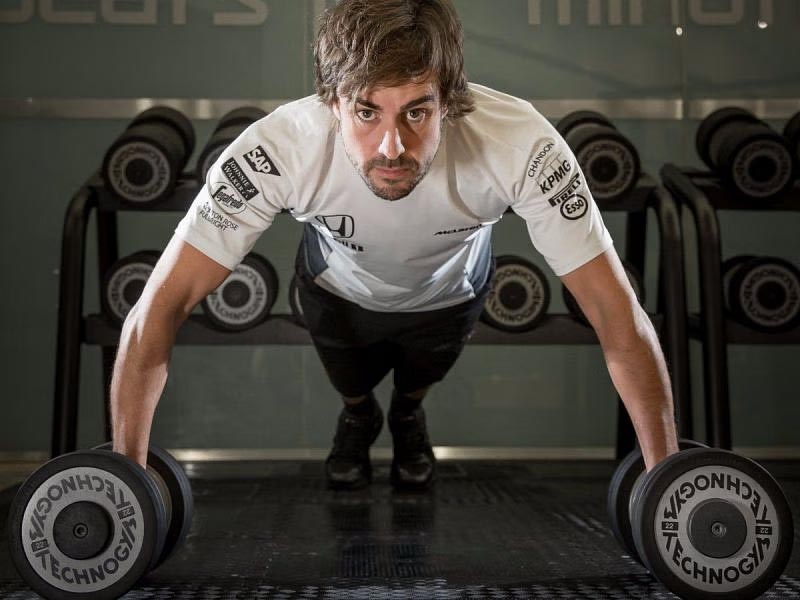
1. Exercise. In the long run, if you only race from a chair, you’ll have to stop due to pain or medical advice. While we’re not subjected to all the physical efforts and stresses of driving a real car, many other aspects are similar. At the very least, posture and mental demands are present and need to be taken care of. This isn’t a joke or pretentious—it’s basic. Take care of yourself if you want to sustain your hobby and become a good SimRacer.
2. Don’t rush into races. At the beginning, you shouldn’t let yourself be swayed by the program’s race calendar or what others are doing. For example, in iRacing, it’s very easy to get caught up in their schedule, and it’s a recurring mistake. Doing so will only lead to frustration and a journey full of ups and downs.
3. At the start of your sessions, hit the track and plan to do only short stints, 3 to 5 consecutive laps, to memorize the circuit and get to know the corners. Rest for a few minutes, reflect on what you’ve done, and return to the track. Do your first laps at a nearly constant, medium-low speed, pushing only at certain points to see how the car reacts if you brake late, but not too much and always with some control. Don’t get desperate, be patient, and try to take in all the details. It’s helpful to consult a track map that shows the degrees of the corners.
4. Then, watch videos of other drivers, hotlaps, etc., to analyze how they take the lines and at what speeds. It’s important to note here that you should pay attention to their FOV, as if it’s very different from yours, what you see might lead to errors or misperceptions about cornering speed, reference points, etc.
5. Establish a routine of training in sessions that are the same length or even slightly longer than the race you’re preparing for. Time Trial sessions (like those in iRacing) are very useful—they force you to practice with a level of concentration similar to a race. They’ll help you improve your consistency and respond to mistakes without losing control.
6. Don’t tweak setups unless you’ve reached a point where you feel stuck despite being very consistent, having thoroughly studied the track, and having good control of the car. That is, if you’re already able to run, say, 30 to 40 minutes straight without mistakes and hitting the optimal line well, but you notice you’re more than 4 or 5 seconds off the average times you’ve seen in the race summaries for the series you’re preparing for. If you were improving in your last stints but now, to shave a few milliseconds off the clock, you have to practically climb the walls in that schizophrenic driving mode I mentioned earlier. Only then should you try adjusting some parameters. There are guides out there to help you understand what you can tweak and why, but as I said, everything in its own time.
7. You’ll notice something very curious: if, after some time using the new setup, you go back to the original one, you might not hit the times you’re achieving now, but you’ll see that you improve compared to when you felt stuck. What’s the main reason for this? Well, all the extra laps you’ve done with the new setup still count and contribute to improving your cornering times and your deeper understanding of the racing line, your ability to better time throttle inputs, the smoothness with which you brake in certain corners to avoid oversteer, etc.—and not so much the setup itself. In other words: with your old setup, you still had a lot of room for improvement. So the next question would be: where would you have gotten with the new setup if you’d had the patience and smarts to squeeze more out of the old one? The answer is likely that you would have improved your times even more with the new setup, simply because your starting point and consistency would be better. So, I repeat, don’t rush to change setups until you’re absolutely convinced there’s nothing more you can do. It’s the hours, more than the setup, that will make you improve, because there are so many details to pay attention to, and it’s not easy to get the most out of the car, its handling, and the track.
8. Train your consistency by practicing long stints and monitoring your section times.
9. Participate in races not aiming to win, but to a) learn to manage your nerves, b) observe the other cars, c) be able to control the car on alternative lines, as certain race circumstances will force you to deviate from your normal line and drive at unusual speeds.
10. Set challenges for yourself during the race, like staying behind other cars while trying not to lose your own reference points. Following someone makes it very easy to lose your line and get “dragged” by the car ahead, meaning if they make a mistake, you probably will too. There are moments in a race when it’s smarter to stay back and wait for things to unfold.
11. It’s very important to be fast, but it’s just as important to be consistent and steady, as this will largely determine your chances in a race. In today’s simulators, it’s not enough to just do the same thing in every corner, because they also simulate the changes the car undergoes over the kilometers (fuel weight and tire wear) as well as track conditions, weather, dirt, rubber buildup, etc. Add to that the fact that in a race, we’re competing with other people who, like us, might have issues, unexpected reactions, or simply spin out after a corner, and it’s clear that being consistent and steady means dealing with all those internal and external factors surrounding us on the track. Managing it all together isn’t easy, but the fact that it’s not is exactly what makes your hobby more interesting and challenging—don’t forget that.
Simulators and Responsibility
Simulators like iRacing help keep many of the factors we’ve just discussed in mind, as they introduce the “responsibility” factor into the equation that makes a SimRacer a good SimRacer. The iR (iRating) and SR (Safety Rating or “safety level”) introduced by this simulator set a “measuring stick” for how good and safe we are at driving. To simplify: if you’re fast and safe behind the wheel, you gain points; if not, you’re penalized. These factors mean that, on one hand, drivers in a race are grouped into sessions by splits (divisions) based on their level or iR, which avoids—or reduces—the chance of good drivers having to deal with the “crazies” or overly careless ones who jump onto the track without doing their homework: studying the circuit, knowing the car, etc., and all those things we’ve already talked about. The erratic, kamikaze behaviors we’ve suffered in other simulators, which frustrate those who want to do things responsibly, are less common in iRacing and, in any case, come at a cost. In this regard, the recently released ProjectCars introduces a set of parameters in the user’s profile that will inform other users about their track record, infractions, etc., but we don’t yet know if those parameters will form some sort of ranking or classification factor that determines, for example, whether you can participate in a specific event.
The Future of SimRacing
The past, but especially the present and future of this discipline, are fascinating, and the technologies surrounding it are becoming increasingly sophisticated, which helps increase immersion levels and, in turn, more accurately conveys the sensations and responses of driving and competing in the motorsport world. Most of us don’t aspire to be real drivers or professional eSport athletes, and while there are cases like that—Lucas Ordoñez, for example—just as people who ride bikes don’t aim to train for the Tour de France, or those who play tennis don’t plan to make a living from it, we SimRacers are here because we love the world of motorsport, we’re passionate about competition, and we want to feel, as much as possible, the adrenaline of an overtake, the thrill of taking a corner faster each time, or simply the challenge of overcoming ourselves and mastering adverse situations with a steering wheel in our hands. For all of this, mental control is key, and you need to train it—don’t forget that. Aim to be consistent before being fast, and you’ll see how, without even realizing it, you achieve both goals.