
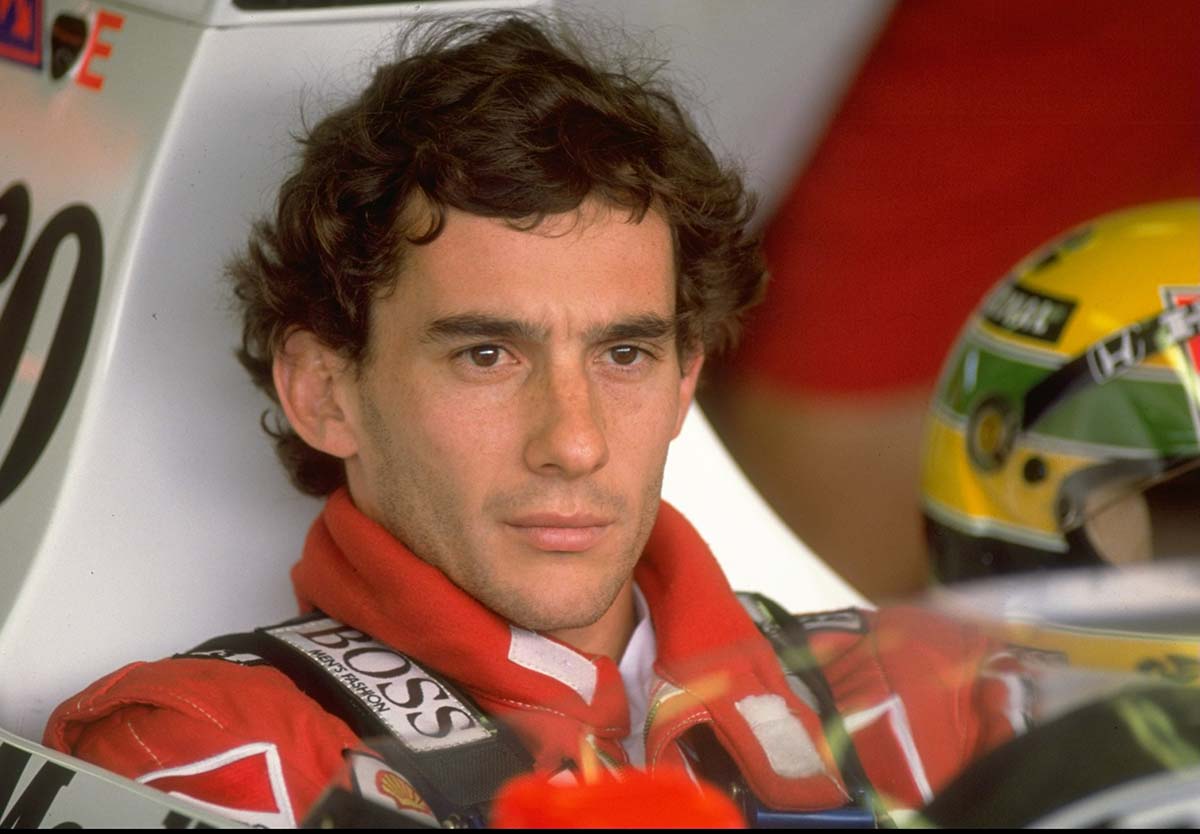
Although it may seem like starting the house from the roof, managing nerves and mental control are the most necessary chapter and, paradoxically, the least addressed in SimRacing competition, unlike what happens in real life. And it’s logical that its importance isn’t often considered: first, because we are amateurs; second, because there isn’t as much at stake; and third, because if we make a mistake, the repercussions are much smaller and only affect our own commitment—or that of our team—to doing things well. But that doesn’t mean it isn’t important, and it is, a lot.
Allow me a brief aside here regarding the term “real” from the previous paragraph. I consider it incorrect to refer to conventional competition as real and SimRacing as virtual, because while it’s true that in the virtual realm the space, the track, the car, etc., are recreated, the competition is 100% real. We aren’t competing against a computer or AI; we’re up against other real pilots, flesh and blood (and mind) like us. In fact—and I’m not trying to be Nostradamus here—I believe car competitions in the future will be predominantly virtual, due to costs and media interests. At that point, they’ll call the “virtual” ones conventional, and today’s real ones will become anecdotal, a typical Matrix anomaly. We probably won’t live to see it, but judging by what’s already happening in iRacing, to give just one example, I’m convinced it will happen, precisely because we’re talking about real competition—hand-to-hand, one-on-one combat, even if the medium is virtual—with rules, judges, penalties, advertising, media coverage via videos, TV, etc., and tangible (real) prizes, as we’re already seeing on many platforms. Back in 2012, the prizes for some iRacing championships exceeded $20,000. That’s why I prefer to distinguish the two realms as physical or virtual, not real or virtual. In any case, virtual competition has already been coined as eSport, and its impact and following are growing exponentially.
Mental Work and Consistency
Back to the topic. Anyone looking at this hobby from the outside, without having tried a well-equipped simulator for a decent amount of time, won’t realize that in a cockpit you can sweat—a lot—that your heart rate can reach significant levels at many moments, and, most notably, that it exercises and trains the mind, eyesight, reflexes, and, especially, concentration and the ability to keep your nerves cool in highly stressful situations, whether momentary or over many minutes and laps. And it’s precisely this last aspect that I’m most interested in highlighting: mental work and consistency. If someone wants to go professional in the SimRacing world, they’ll need to take this aspect very seriously, but what I want to emphasize is that even an amateur who wants to enjoy this discipline in the long term will need to do the same, because it’s key to progressing and fueling motivation, seeing that you’re in control and enjoying that control, thus achieving your main goal: fully enjoying your hobby.
Drivers in the physical world know this is a fundamental aspect, perhaps even more important than being fast. But in SimRacing, as we’re somewhat heirs to the mindset of seeing and feeling simulation as a game, we hop into a 400-hp car without hesitation and tackle every corner flat out. And it’s not enough to do it alone in a practice session; even though we clearly don’t know the corners or have minimal control over the car, we’re eager to jump into races. We feel the need to measure ourselves, to test our limits, because it gives us quick emotions that, though fleeting, make us feel good, euphoric. But this lasts very little—any experienced SimRacer knows this and usually avoids falling into these traps of haste and euphoria. Because those sensations last only until we realize we’re not getting anywhere, that we can’t string together three laps without mistakes, and that the thrill of overtaking a few cars like madmen has a very short lifespan and is highly volatile.
Key Aspects to Be Fast and Consistent
There are two key aspects to being fast: 1) knowing the track very well, 2) knowing the car and being able to push its limits. But there’s another fundamental aspect for a driver, whether physical or virtual, that will bring the most success: being consistent, having good mental control. This third aspect also helps you improve in the first two and, therefore, contributes to being fast, as it allows you to stay focused on the racing line and control the vehicle. But above all, it provides consistency. Most people master the first two, but few—precisely because it’s an aspect often overlooked in virtual racing—master the art of completing thirty consecutive laps on a track, keeping section times steady and mistake-free. Doing that alone is already hard, but in a race, the difficulty is even greater, as you also have to manage other drivers, study overtakes, strategies, etc., all of which test your nerves. The reason most of us are inconsistent is simple: we don’t train this aspect. Yet, it’s precisely the one that most allows you to improve, win, or have good races.
Common Mistakes and the Importance of Setup
When starting in simulation, there’s a recurring mistake we all fall into. After just a few sessions, when we still can’t manage five identical laps, we start to feel that improving our times is incredibly difficult. In fact, we even notice we’re getting worse. Then we start to get frustrated, doubting our ability to understand the car and its responses, the track, and how to be fast. Next, seeing others’ times, we begin to think maybe the car isn’t well set up, that the base setup might not be entirely good. In short, we grow impatient to be fast. In the end, we convince ourselves that tweaking the setup is a solution and that changes will surely improve us. It’s true that a good setup can enhance certain aspects of the car’s behavior, but it’s equally true that with the base setup, many hours of practice, and studying the racing lines for each corner in detail, you can achieve much more—especially consistency. And that’s where the key lies, in consistency: without a doubt, the more consistent you are, the more you’ll improve your results—not just because most people aren’t consistent and you’ll quickly climb the ranks, but because consistency only comes when you can visualize the track, memorize its quirks, consciously automate the movements needed for the optimal racing line in each section and corner, and, importantly, not lose control even when you make a mistake, take a wrong line, or race circumstances disrupt your rhythm and force you to improvise or find solutions in split seconds.
Training the Mind and Body
As I said, even when you know the track, have mastered all its sections, and control the car perfectly, you’ll notice that after 15 consecutive laps, your mind isn’t functioning the same way anymore—distractions creep in, causing you to lose the optimal racing line, and, almost without realizing it, your times plateau or drop. What’s happening? Simple: you’re getting physically and, above all, mentally tired. How do you improve in these two areas? No doubt about it: by being in good physical shape and, as far as we’re concerned here, training consistency and the ability to concentrate and focus a lot.
There’s a maxim that some don’t even notice, and while most are aware of it, they struggle to internalize it and make it their main key to progress and improvement: if you can’t spend 30 minutes alone doing laps at acceptable times on a track without making mistakes, don’t expect to compete in races of that length, with all the external factors at play and against you, and win. You might snag a victory, probably more due to others’ shortcomings than your own actions, or simply by sheer luck, but you’ll be falling into what some call false success. You’ll think you’re improving, convince yourself that this is the way to go, that it’s valid, when in reality it’s not, and this will last until the next failure or disappointment. The key lies in something Nadal said in an interview after winning his fifth Roland Garros: “I think winning… of course it makes you happy momentarily, but what really makes you happy isn’t the victory—it’s the personal satisfaction of having worked and given everything you could to get there.”
Setting Realistic Expectations
When starting any hobby, as in life, you must set expectations that are balanced and appropriate to your position if you want to develop what you’re doing on the right foot, with solid foundations. In this sense, it will give you more satisfaction to finish fifth but with consistency than first but having raced erratically, always feeling on the edge of schizophrenia, out of control. Because while the high after those races is incredible, it fades—it’s fleeting, wild joy—and you’re building your hobby and taste for doing things well on shaky ground. What goes up comes down, and anyone who wants to evolve consistently in this hobby, as in many others where the mental component is crucial, must forge a strong foundation that allows them to enjoy it to the fullest even without winning. That’s where mental consistency must be a key goal, not just speed. Evolving with consistency is the only thing that will give you experience and a clear perception of where you stand, your limitations, your achievements, and strengthen your (real) confidence in yourself.